

Buckinghamshire New University awarded prestigious Bodyswaps & Meta XR Education Grant
Buckinghamshire New University is pleased to have been awarded the prestigious Bodyswaps & Meta XR Education Grant, an innovative initiative that combines cutting-edge virtual reality (VR) with AI-driven soft skills training. This exciting opportunity enabled students from the MSc Nursing and Master of Public Health (MPH) programmes to experience a powerful blend of immersive technology and simulation-based learning.
Bodyswaps is a VR training platform that places learners in realistic, scenario-based environments to practise essential communication and professional skills. A unique ‘body-swapping’ feature allows students to view their own performance from another person’s perspective, enhancing reflection, empathy, and self-awareness.
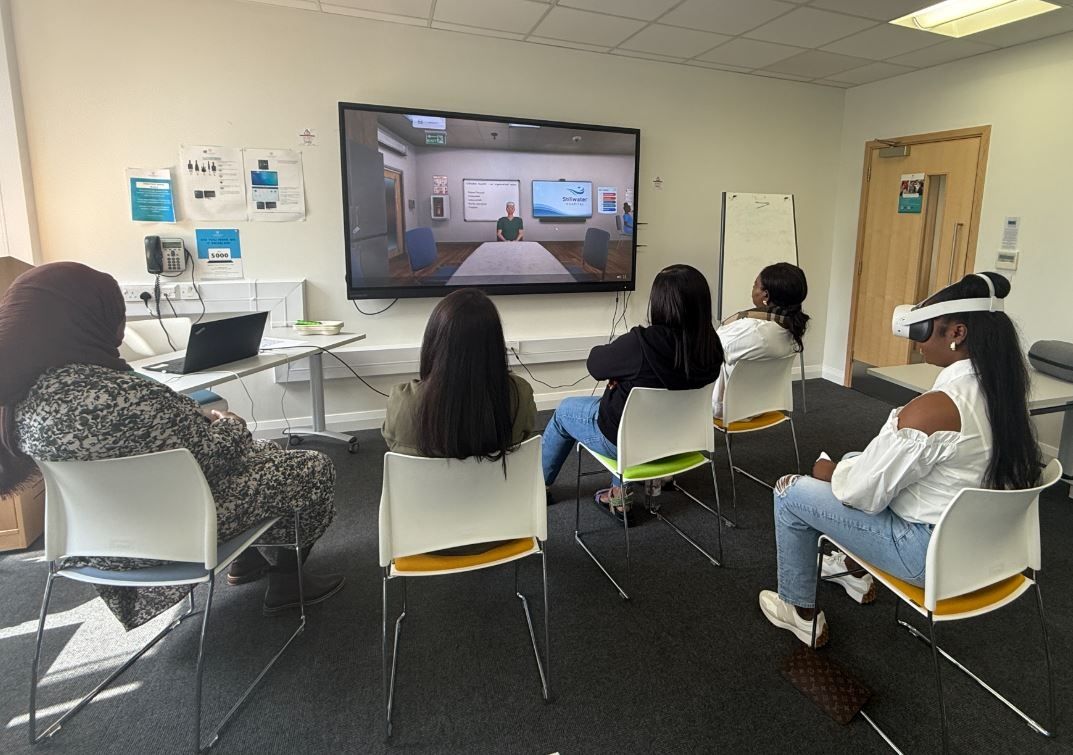
Grounded in simulation pedagogy, the project provided students with a safe and structured space to rehearse key behaviours, receive AI-generated feedback, and improve through guided repetition. Using virtual reality headsets, learners completed three focused modules:
🔹 SBAR (Situation, Background, Assessment, Recommendation): Students refined their ability to communicate clinical information clearly and effectively, building confidence in structured handovers.
🔹 Values to Guide Actions: This scenario placed students in ethically challenging situations where they were required to apply core NHS and public health values to guide decision-making and professional conduct.
🔹 A Patient-Centred Approach: Learners engaged with virtual patients to practise empathy, active listening, and appropriate body language—critical components of high-quality, compassionate care.
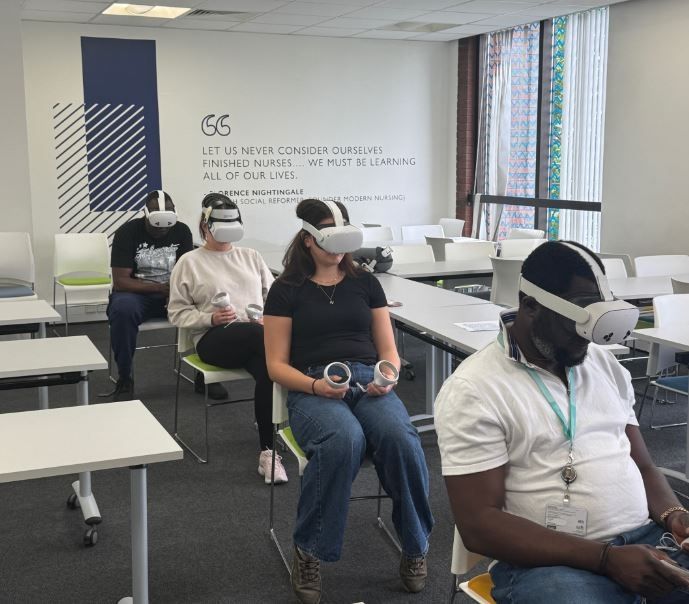
The pilot was supported by BNU’s Digital Campus infrastructure, which played a key role in enabling access to immersive learning through reliable technical support, digital learning guidance, and provision of headsets. This reflects the university’s commitment to embedding technology-enhanced learning across its programmes in meaningful, student-focused ways.
Student feedback has been overwhelmingly positive, with many describing the experience as engaging, insightful, and highly relevant to their future professional roles. Learners reported increased confidence in communication and a greater understanding of how to apply professional values in practice.
By combining the immersive power of VR, the theoretical rigour of simulation-based education, and the support of BNU’s digital innovation strategy, this initiative marks a significant step forward in preparing students for the complex demands of modern healthcare and public service.