

BEng (Hons) Civil Engineering
- Study Mode: Part Time
- Location: High Wycombe
- Duration: Six Years
- Start Date: September 2026
You can also study this course:
Developed in-line with the Engineering Council standards, this BEng Civil Engineering course allows you to delve into a dynamic field with an array of opportunities for specialism and growth.
At BNU you're not just learning about structures and infrastructure, you're learning how you can shape the future. Gain the skills to design sustainable buildings, resilient infrastructure, and innovative solutions that tackle global challenges like climate change and urbanization head-on.


Civil engineering, and engineering itself, is a dynamic field with endless opportunities for growth and specialisation. Whether you're interested in transportation, environmental engineering, or structural design, our program provides a solid foundation for pursuing your passion.
We understand that we can learn and develop as a community of forward-thinkers and innovators, that’s why all the undergraduate programmes within our Engineering and The Built Environment School share their first year, allowing you to build foundations in multidisciplinary areas of engineering science.
During your time on the course you’ll have access to our state-of-the-art and brand-new Engineering and the Built Environment facilities, including;
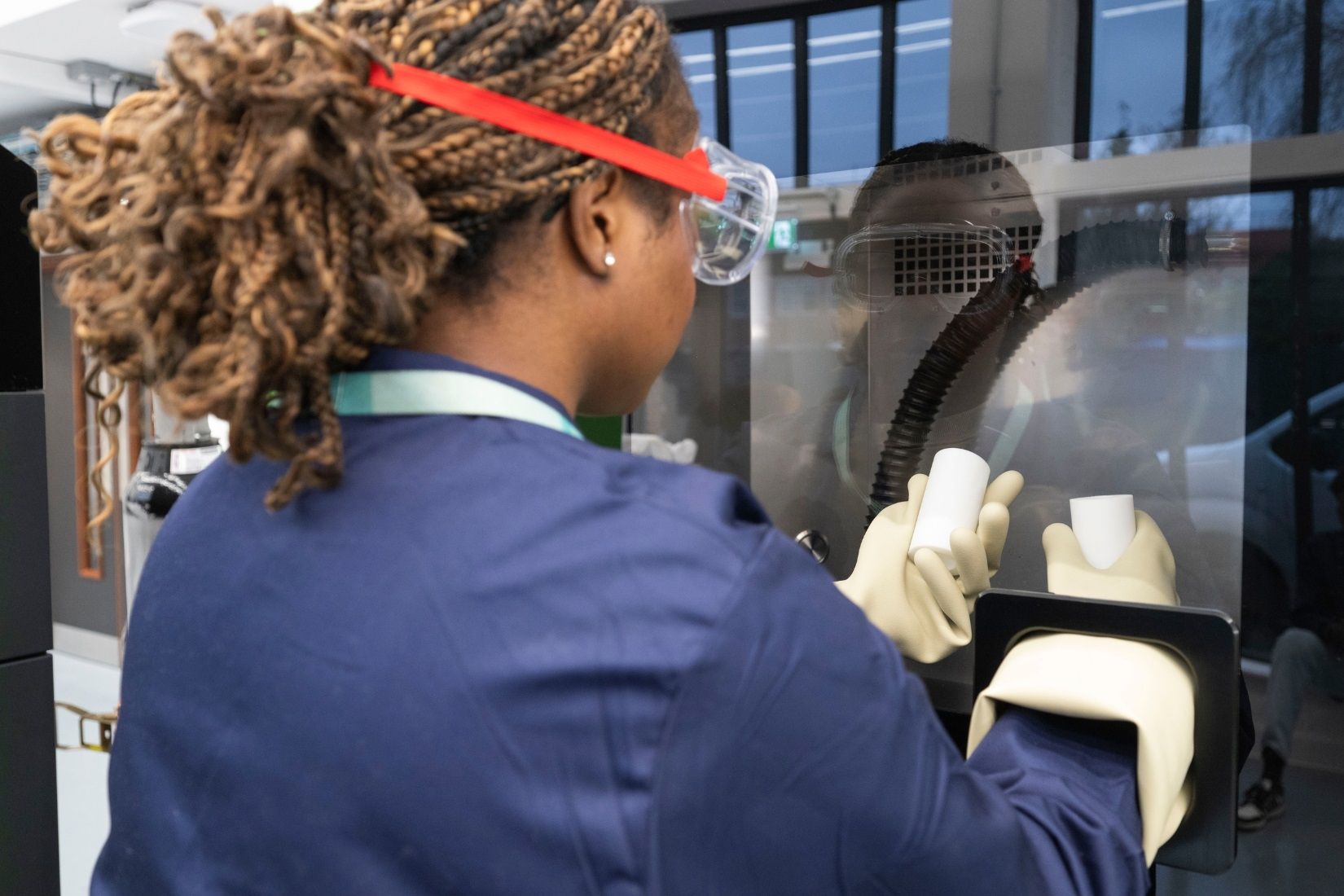
- Mechanical/Structural Lab, to include different Structural Test kits that will measure Deflection of Beams & Cantilevers, Bending Stress and Bending Moments etc.
- Materials and Manufacturing Lab, to include 3D Metal Printer, Hardness Tester, Universal Tensile Testing, Impact Tester, Milling and Drill machines
- Fluids and Hydraulics Lab, to include Digital Hydraulic Bench, Axial Flow Pump, Recirculating Flume, Hydro-electric Turbine and Surface Tension Balance.
- Process and Energy Lab to include HVAC unit, Air Conditioning Trainer, Process Trainer, Wind Turbine Dynamics and Photovoltaic Cells
- Concrete & Geotechnical Testing Lab, to include Slump Test, Concrete Density, Porosity, Flexural and Compression Testing, Soil Shear, Grading and Moisture Tests.
- Electrical and Electronics Lab, to include Power and Energy Electronics, Modern Electrical Machine Systems, Three Phase Power Systems
- Automation Lab to include Dobot Smart Industry 4.0 Workstation, pneumatic, electro-pneumatic, PLC systems
- Immersive Virtual Reality Lab to include 3D interactive screen for virtual learning environment
- CAD Lab to include high spec computers for engineering design and simulation
Civil engineering is a versatile field with a wide range of career opportunities. Civil engineers are in demand across various industries including construction, transportation, infrastructure development, environmental engineering, and more.
Indeed, civil engineering is among the highest-paying engineering disciplines, offering competitive salaries and benefits. The demand for qualified civil engineers is expected to continue growing, especially with the increasing need for infrastructure development and sustainability initiatives worldwide.

At BNU we immerse you within industry as much as possible. From site visits to guest talks and masterclass opportunities, you’ll have the chance to get hands-on with the experts.
As part of the School of Engineering and the Built Environment you'll benefit from our academic partnership CABE (Chartered Association of Building Engineers).
This programme runs as both a part-time and full-time course, with full-time running as a three-year option. As well as this we offer the full-time course with an additional placement year in your third year. This four year option allows you to get hands-on within the industry, before you complete your studies.
We also offer this course as a four-year Foundation Year programme. The Foundation Year will allow you to develop your academic study skills and build confidence in your abilities, identifying your own strengths and development needs for progression onto an undergraduate programme.

What will I learn?
Civil engineers play a crucial role in shaping the world around us. They design, construct, and maintain essential infrastructure such as buildings, roads, bridges, dams, and water supply systems, which in turn contribute to the development and improvement of society.
The field of civil engineering is also constantly evolving with advancements in technology and materials, and as a civil engineer, you'll tackle some of the world's most pressing challenges, from climate change adaptation to urban development.
On the BEng Civil Engineering course, you’ll delve into core topics such as structural analysis and design, geotechnical engineering, transportation engineering, environmental engineering, and hydraulic engineering. We also ensure that sustainability and innovation is at the core of our curriculum and modules.
During your time on the course you’ll contribute your own innovative solutions to a range of questions and challenges such as climate change adaptation, renewable energy integration, and smart infrastructure development.
Throughout the course, you will engage in design projects and laboratory exercises that simulate real-world engineering challenges. These hands-on experiences allow you to apply theoretical knowledge to practical problems, develop critical thinking skills, and gain valuable experience in project management and teamwork.
In addition to technical knowledge, the BEng Civil Engineering course also focuses on developing employability skills such as communication, problem-solving, teamwork, and project management.
These skills are essential for success in the workplace and are cultivated through group projects, presentations, and other collaborative activities. Employability is also embedded throughout the course through various professional development initiatives. This may include workshops on resume writing and interview skills, guest lectures from industry professionals, and opportunities for networking and internships.


How will I be taught and assessed?
During your time on the Civil Engineering programme, you’ll experience a range of active teaching methods and authentic assessment strategies, with an emphasis on both practical and traditional teaching approaches.
You’ll also have opportunities to put your knowledge learnt in lectures and tutorials to practice In laboratory sessions and during a range of practical activities.
Traditional forms of assessment include;
- Written assignments
- Report
- Portfolio and digital models
- In-class assignments
- Computer-based test
- Set Presentations (for example, poster and oral)
- Proposal
- Dissertation
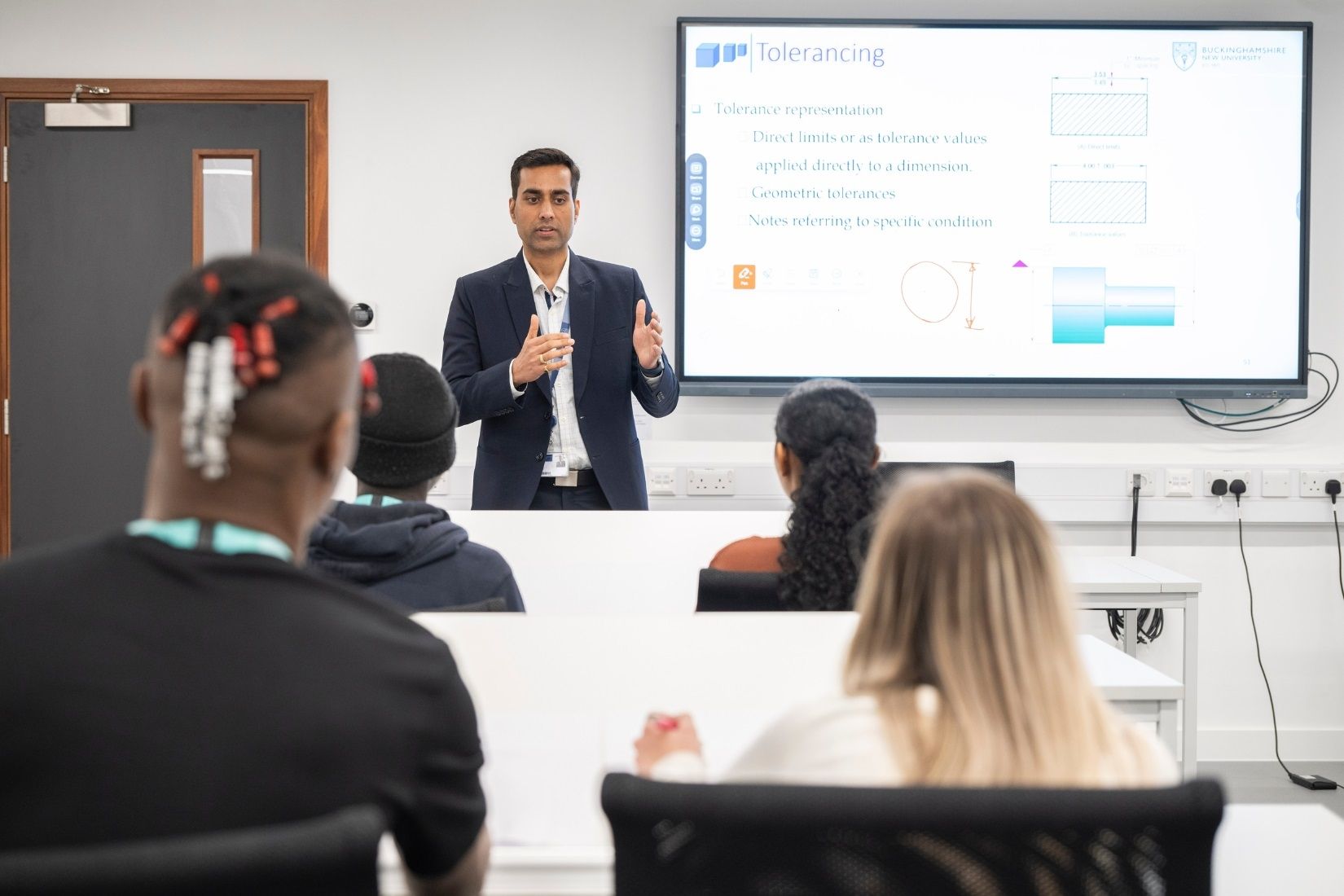
On this Civil Engineering programme, you’ll study in a close-knit tutor group where everyone’s input is recognised and valued. Not only will you make friends for life, but you’ll also make important connections that will last through your career, and you’ll form a network, just like you’d find in the working-world.

Explore our Engineering blogs

Comment: The Hidden Engineering Behind Theme Park Safety
Theme parks are designed to provide thrill and excitement, but behind every ride, particularly rollercoasters, lies an intricate framework of engineering precision and rigorous safety measures.

Why choose a career in Engineering?
Engineering is one of the fastest growing and broadest sectors within the UK, meaning it is crucial to our economy and critical that employers find graduates who are ready to step into hands-on and innovative roles.

What are the course entry requirements?
A typical offer will require a UCAS tariff score of: 104 - 128
UCAS points can be obtained through qualifications such as A levels, T levels, BTEC or an Access to Higher Education course in a relevant subject. Please list all your qualifications on the application form as you will be asked to provide copies when we receive your application.
- A Level – BCC - BBB (At least a grade C in Mathematics or Physics (or equivalent qualification))
- T Level - Merit (Maintenance, Installation and Repair for Engineering and Manufacturing, Design and Development for Engineering and Manufacturing, Engineering, Manufacturing, Processing and Control)
- BTEC - DMM. BTEC National Diploma/Extended Diploma in Engineering or Physics, including a minimum of a Merit in the Maths unit.
- GCSE - GCSE Maths and English Grade 4/Grade C (or above) or equivalent qualification
For further details of our international English entry requirements, please visit our international pages.
Students from an HNC, HND and Foundation Degree Engineering or equivalent may have the opportunity to join this programme as part of the progression route at either Level 5 (year 2) or Level 6 (year 3).
Modules
This provides a guide of the modules that make up your course. You can find more information about how your course is structured on our Academic Advice section.
What are the tuition fees
Home
-
Home, Academic Year 2026 - 2027: £4,895 per year *
Please note all of the 2026/27 fees stated are subject to parliamentary procedure. Tuition fees are expected to increase each academic year in line with the maximum permitted value set by the Government for that academic year. The expected rise for Home undergraduate students (including those on a foundation year course), may impact both new and continuing students.
Please note, distance learning and international fees are subject to change for 2027/2028 intake.
Additional costs
Your tuition fees cover most course costs, but you may need to budget for additional expenses. These can include specialist equipment, project materials, professional memberships, field trips or placements, as well as everyday student costs like printing, books and stationery.
Contact us
If you have any questions about the fees above, contact our enquiries team by completing this form.
We believe that Buckinghamshire New University fills a vital role in providing further education. Instron has had a long-term relationship with the University. We regularly hire apprentices and graduates in many different disciplines. From the workshop to marketing, some have stayed on to become valuable members of our team.Peter Fuller Sales and Applications Engineer at Instron.

What are my career prospects?
Throughout your time with us we’ll support you on the route to your chosen career. We’ll help you to develop crucial skills, encouraging you to become enterprising, employable and good leaders. We also help you find employment after graduation. Have a look at our Careers and Employability pages to find out more.
Upon graduation from this BEng (Hons) Civil Engineering degree, you’ll be prepared for a range of career possibilities. Using the skills and knowledge learnt on this course, you could find yourself;
- At a consulting engineering firm, designing and managing projects for clients in areas such as transportation, water resources, structural engineering, and environmental engineering.
- Within the construction industry, working for construction companies to oversee the planning, design, and execution of construction projects such as buildings, bridges, roads, and infrastructure.
- Specialising in transportation engineering, designing and managing transportation systems, including roads, highways, railways, airports, and public transit systems.
- As structural engineer, focusing on the design and analysis of buildings, bridges, dams, and other structures to ensure they are safe, sustainable, and compliant with building codes and regulations.
- As an environmental engineer, protecting and preserving the environment by addressing issues such as pollution control, water and wastewater treatment, sustainable development, and environmental impact assessment.
- Specialising in geotechnical engineering, where they study soil and rock mechanics to design foundations, slopes, retaining structures, and underground structures for construction projects.
- As a water resources engineer, to focus on the planning, design, and management of water-related infrastructure, including dams, levees, flood control systems, water supply networks, and wastewater treatment plants.
- Specialising in urban planning and development, where they help plan and design sustainable communities, transportation networks, and infrastructure systems to support population growth and urbanization.
- Pursuing careers in research and academia, conducting research in areas such as structural mechanics, materials science, transportation modelling, and sustainable infrastructure development, and teaching at universities and research institutions.
Course leader