
BA (Hons) Interior and Spatial Design (Top-up)
- Study Mode: Full Time
- Location: High Wycombe
- Duration: One Year
- Start Date: September 2026
You can also study this course:
Completed a foundation-level degree, HND, or equivalent qualifications in a relevant Art and Design subject? Top-up your studies to gain a full bachelor’s degree in Interior and Spatial Design.
Accredited by the Society of British and International Design (SBID), this degree will focus on creative enhancement of architectural environments, involving the design of spaces through an articulation of how people inhabit, utilise and experience spaces and contexts.
Stay updated with all our latest BA (Hons) Interior and Spatial Design news by following us on Instagram @bnu_interior_spatial.


If you admire the world around you, find beauty in the aesthetic, to the small details, of an environment then this industry is waiting for you. This programme is aimed at those who passionately want to produce designs for the spaces in which we live, work and engage in leisure activities. You will convert and renovate existing buildings as well as design new structures and spaces.
A top-up degree is the equivalent of the final year of an undergraduate degree, and offers a chance to deepen your knowledge, skills and understanding of your subject, while also getting an internationally-recognised qualification.
If you have completed a foundation-level degree, HND, or equivalent qualifications in a relevant Art and Design subject, you can choose to top-up your studies to gain a full bachelor’s degree.
The course is accredited by the ‘UK’s leading accreditation body to the interior design industry’, SBID (Society of British and International Design). As well as this we are also a member of the network Interior Educators, here you’ll be able to take part in forums, exchange ideas and take part in competitions.
At BNU we understand that a high standard of facilities is key to your growth and development as a designer.
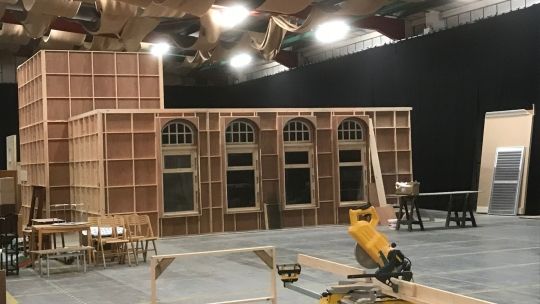
The course gives you access to a wide range of resources including digital suites, where you will learn how to use Auto CAD, Rhino and other software such as Photoshop and InDesign. You’ll also have the opportunity to develop your studio and workshop-based model-making skills using our laser cutting and 3D printing equipment.
You’ll find yourself based in the designated studio for the course, where you’ll have an individual workspace, where you can hang inspiration, designs and ideas. The studio encourages professional learning as it mirrors practices within the profession.
Led by a dedicated teaching team with a wealth of experience within the interior and spatial design, exhibition design, landscape design, model-making and design visualisation and animation industry. Many of your tutors on this course are also involved with design practice and research.
Not only will you benefit from a rich and varied programme, you’ll also have direct access to guest lectures, potential live project briefs, master classes, and plenty of networking opportunities with leading designers.
Our external partners and collaborators include interior designers, architects, exhibition and event designers, museums and music industry contacts. The course offers study trips to London and abroad, focussing on the discovery and understanding of design and its consequences by visiting world renown architectural and design practices. Additionally, our alumni who are practicing internationally, continue to offer work opportunities to you.
By studying this course, you will develop as multi-disciplinary designers, with opportunities to develop different aspects of Interior and Spatial Design. The strong grounding you will acquire in the subject enables you to follow career ambitions within the profession or progress to postgraduate studies upon graduation.
What will I study?
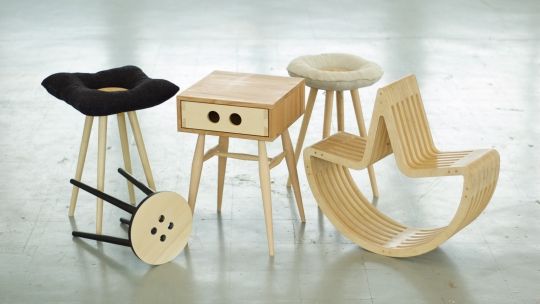
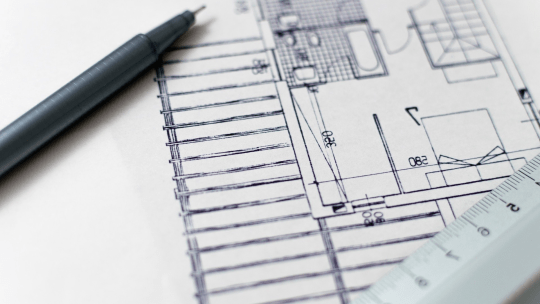
The degree embeds professional skills as design tools at its core. You’ll explore freehand drawing, model making, object fabrication, technical drawing, 3D modelling and digital visualization. You will learn how to design and specify fixtures and fittings as well as materials for construction, evaluate processes, and communicate how spaces are built.
The course covers the conceptual, theoretical and practical skills needed to become a successful Interior and Spatial Designer. You’ll learn historical and contextual studies, giving you a knowledge of the relationship between design theory and practice. You'll also analyse the material qualities of spaces so that you can specify fixtures and fittings.
Upon graduation you should be able to solve interior and spatial design issues and produce detailed and construction drawings for spaces and structures referring to building regulations, as well as specify and source fixtures, fittings and materials.
On the Interior and Spatial Design course I have the opportunity to develop my ideas, style and designs through live projects, briefs and modules. I really enjoy the freedom that I get from concept to creating. This freedom has seen me learning to work with wood, metal and 3D printers, among other mediums that give life to my ideas.Kotsi Mariaelen
How will I be taught and assessed?
This course is mostly practice-based so you will have ample opportunity to develop your subject through a hands-on, experimental approach. This will involve access to workshops to support the design process.
You'll also learn through:
- lectures, seminars and workshops;
- guided research and reading;
- examination of projects, simulated or real;
- analysis of work-based scenarios;
- independent learning through individual learning plans;
- tutored classroom sessions;
- visiting speakers and guest lecturers.
To achieve the full BA (Hons) in Interior and Spatial Design you’ll need to complete the modules listed, as well as a major project and a dissertation.
The major project and dissertation will allow you to investigate a topic important to you within interior and spatial design. You will cover the whole research process, undertaking empirical investigation and analysis. You will be allocated a dissertation supervisor, who will offer support and advice.
The Professional Practice module gives you the opportunity to undertake work-based learning or answer live industry briefs, gaining the practical and transferable skills you need for your career in the creative industries.
What are the course entry requirements?
This programme is offered as a top-up qualification for students who have completed a HND, FDA, or other equivalent qualification in a relevant Art and Design subject, and wish to progress further to achieve an Honours degree.
Modules
This provides a guide of the modules that make up your course. You can find more information about how your course is structured on our Academic Advice section.
This module will enhance your understanding and appreciation of the roles, relationships, and responsibilities that can play a major part in progressing and sustaining your professional practice. Extending your work in relation to career aspirations, you’ll develop visual, verbal and written presentation skills to support communication within a range of business, financial and professional frameworks.
As prospective Interior and Spatial Design graduates and professionals, it is crucial to master the processes of managing and delivering complex projects. During this module, you will work on a set design brief exploring all the key aspects encountered during past studies. The aim is for you to master the entire design process and produce the materials expected in professional contexts for project proposal submissions.
Through a number of workshops, seminars, and one-to-one supervision tutorials, this module provides you with the support required for writing your contextual report on practice. This self-directed theoretical/critical and evaluative piece of written work consists of a detailed account of the critical references surrounding your final major project, evidencing the in-depth research conducted towards the materialisation of your project.
This module builds on the knowledge and experience of previous studies that focus on knowledge and skills to support professional practice in the visual arts, design and the creative industries. You’ll develop in-depth knowledge of their chosen field of practice, which will support the critical appraisal process and inform the social and professional context for your work.
You are provided with an opportunity to sustain the creative dialogue between your research and subject-based practice, enabling you to establish their professional and creative identity through a self-directed brief/proposal. Awareness of the wider influences on the sector in parallel to individual development of concepts is essential. This module aims to consolidate and extend practical knowledge that has been acquired in prior levels to extend experimentation with techniques, materials and processes to realise creative and innovative outcomes.
What are the tuition fees
Home
-
Home, Academic Year 2026 - 2027: £9,790 per year *
International
-
Overseas/International, Academic Year 2026 - 2027: £15,910 per year *
Please note all of the 2026/27 fees stated are subject to parliamentary procedure. Tuition fees are expected to increase each academic year in line with the maximum permitted value set by the Government for that academic year. The expected rise for Home undergraduate students (including those on a foundation year course), may impact both new and continuing students.
Please note, distance learning and international fees are subject to change for 2027/2028 intake.
Additional costs
Your tuition fees cover most course costs, but you may need to budget for additional expenses. Students should budget approximately £100 per year for books and journals, around £50 per year for printing and photocopying, and between £100–£200 per year for project materials and exhibition work. Students are encouraged to purchase a basic construction tool kit, and from second year may wish to purchase a laptop, with estimated costs ranging from approximately £200–£1,000 depending on specification. Optional costs may include study trips to London (approximately £20–£50 per year) and graduation costs estimated at approximately £100–£200.
Contact us
If you have any questions about the fees above, contact our enquiries team by completing this form.
What are my career prospects?
Throughout your time with us we’ll support you on the route to your chosen career. We’ll help you to develop crucial skills, encouraging you to become enterprising, employable and good leaders. Our Careers and Employability Team also help you find employment after graduation.
As a contemporary designer, you'll have excellent knowledge of recent developments in the field of Interior and Spatial design. Our BA (Hons) Interior and Spatial Design course will help prepare you for a range of career possibilities, such as:
- Interior Designer
- Interior Decorator
- Exhibition and Event Designer
- Visual Merchandiser
- Display Designer
- Production and Set Designer
- Model-Maker.
You may also wish to stay on at Buckinghamshire New University and study our full-time or part-time Postgraduate Courses.
Course leader