BA (Hons) 3D Game Art
- Study Mode: Full Time
- Location: High Wycombe
- Duration: Three Years
- Start Date: September 2026
You can also study this course:
Do you love computer games? Kick-start a career designing the animations that bring them to life with a degree in 3D Game Art. You’ll have access to purpose bought, up-to-date hardware and use industry standard software, ensuring everything you learn is current and relevant.


BNU's 3D Game Art degree is designed in collaboration with industry professionals, making sure the skills you acquire are aligned with current market demands. You’ll learn everything from character design to environmental modelling, using industry-standard tools like Maya and Unreal Engine. This means you're job-ready and can hit the ground running upon graduation.
The university's proximity to London provides networking opportunities with industry experts, guest lectures, and potential collaborations. BNU also hosts regular events, such as industry panels and visits to major studios, where you can meet professionals and learn from their real-world experiences. These connections help you gain insight into the industry and open doors to future opportunities.
Throughout your studies, BNU offers dedicated career services, including workshops, portfolio reviews, and networking events. The program is designed to equip you with the tools needed to navigate the competitive job market confidently. Whether it’s refining your CV or preparing for interviews, you’ll have access to the support needed to land your dream job.
The course emphasizes creating a high-quality showreel, a crucial asset when entering the job market. You’ll have multiple opportunities to refine your portfolio with feedback from tutors and industry professionals, ensuring it represents your best work. Graduating with a strong portfolio makes you stand out to employers and sets you up for success.
BNU alumni have secured positions in major VFX houses and game studios, contributing to high-profile projects, including blockbuster films and games. You could follow in the footsteps of graduates who now work at companies like Rockstar Games and Creative Assembly. Their success stories highlight the course's ability to launch creative careers in the games industry.
BA (Hons) 3D Game Art had been recognised as a verified Unreal Engine Academic Partner which means we are committed to meeting Unreal Engine's standards for excellence in game development education.
As a BA (Hons) 3D Games Art student, you’ll have access to a range of resources tailored to support your studies. From enterprise software licenses, premium service subscriptions, and chances to network with professionals in the gaming industry.



What facilities can I use?
We’ve made sure you have access to industry-standard equipment, which we review yearly to ensure we are producing industry-ready graduates. During your studies you will work in our Computer Labs and have access to specialist software, some of which includes:
- State-of-the-art Motion Capture Equipment
- Unreal Engine
- Unity
- Maya
- 3DS Max
- Substance Suite
- Zbrush
Amongst a range of other software.
Whilst studying with us you will also use our BucksAnywhere web service, which provides access to many of the software applications you use for learning and studying. BucksAnywhere can be used from your own device or from a University owned PC or laptop, from any location. You will also be able to remotely access our VDI, which is a powerful computer that will give you access to both sufficiently powered hardware and the software relevant to the course.
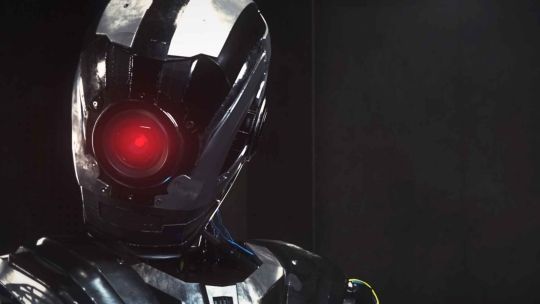
The Xsens video below was our first experiment with our new Xsens motion capture suits. With the help of dancers from BNU’s BA (Hons) Dance and Performance course, we motion captured a routine on the concourse running though the university and replaced one of the dancers with a version of the Lonely Robot and comped this back into the footage. We also have state of the art Faceware kits for face motion capture.
In your final year you will also study in our ASUS ProArt lab which is designed to help you deliver your very best work. The lab features Scan 3XS workstations and a range of high performance display monitors from the Asus ProArt range. These provide excellent colour grading to help you produce colour accurate work for your final projects and showreels.
What will I study?
On this course you will be taught the fundamentals of 3D modelling and animation, and as your studies progress, your skills with modelling will also improve, and you will also learn about games engines and design.
The focus of this course is on professional workflows for creating 3D assets such as characters, props and environments. You will learn how to export and set these up in a games engine and learn the fundamentals of interactivity and gameplay elements. The course has been intentionally designed to be flexible, to allow you as a student to select and pursue your own specialism within the field.
During your time with us you’ll discover both the animation and modelling aspect of the field, which you will then develop to include more advanced aspects such as organic sculpting, hair and clothes.
You’ll undertake individual and project work, having the opportunity to take a set industry style project and a creative project to develop your specialist skills and build an industry ready portfolio.
You’ll also be invited to join additional online groups where you will be able to meet the other students taking our animation, visual effects, game art and visualisation courses, both MA and BA, online and attendance. These help to foster a sense of community and are also places where extra-curricular collaborative projects, such as game jams, take place. You will also be able to meet our alumni in these broader forums. All forums are moderated by the lecturers.
How will I be taught and assessed?
On our course the teaching will feature a variety of approaches and technology, blended together to engage your learning in class and beyond, and to encourage your full participation. The teaching and learning strategies have been designed to ensure that there is progression from formal teaching through to independent learning as you progress through the levels of the programme.
You will be taught by tutors and lecturers who are current or former industry practitioners, meaning they have in depth knowledge and experience that you can benefit from and in addition, you will experience industry guest masterclasses.
You will be supported with workshops, lectures and seminars that introduce you to a range of topics around 3D development. What you learn will be assessed through a variety of means including coursework that is created with 3D software, presentations and writing a series of reflective journals.
You’ll spend time learning and practicing the skills required by each unit before undertaking summative assessments the form of projects which will enable you to apply and combine their newfound skills together in a meaningful way while tackling tasks commonly found in the industry.
Classes will take place in appropriate computer labs which are equipped with advanced computers and will allow you to explore the subject to the standard that a junior professional will be able to achieve. You’ll attend classes each week with a lecturer present and during these sessions you will have the opportunity to ask questions and get real time responses and feedback from both lecturers and other learners. Normally these will begin with a group seminar or demonstration and then break into 1:1s where you will have the opportunity to discuss your individual progress directly with your lecturer. Sometimes these seminars will be used for presentations and review in a manner that mimics the dailies process in industry.
In addition to this there will be video based lecture content that will be focused on the demonstration of essential skills and clarification and expansion of key concepts and techniques. This will be facilitated via our online learning platform, where you will be able to access sets of recorded lectures which will each be on average 10 minutes long.
Other learning techniques that will be employed appropriately to the situation include:
- Demonstrations for new techniques
- Group work
- Video feedback
- Peer review
- Use of books, magazines, video and online resources
- Research methods
What are the course entry requirements?
A typical offer will require a UCAS tariff score of: 88 - 112
UCAS points can be obtained through qualifications such as A levels, T levels, BTEC or an Access to Higher Education course in a relevant subject. Please list all your qualifications on the application form as you will be asked to provide copies when we receive your application.
A minimum of two full A-levels (or equivalent) is required. Every application is considered on an individual basis.
For further details of our international English entry requirements, please visit our international pages.
Once you have received your offer from us, you will have the opportunity to meet with one of your tutors online to talk about your course. If you have any work you'd like to share, we’d love to see it!
What sort of things could you show us?
We want to see the work that you are most proud of. While pieces of animation, visual effects and game art can be an advantage we are looking for artistic sense / instinct which can be demonstrated in many other forms, including but not limited to:
- 3D Animation sequences
- 2D Animation sequences
- VFX sequences (done e.g. in After Effects or other similar software)
- A game level
- 3D modelling – renders or animated turnarounds of characters, environments, props etc.
- Photography – either traditional or digital.
- Life drawing
- Paintings
- Drawings / sketches
- Sculptures
- Digital art – e.g. created in Photoshop or other similar software
- Short live action films or documentaries.
How much should you show?
This depends on what you are submitting. If you have individual images / pictures / paintings, then no more than your favourite 12. If you have project work such as an animated sequence, a game level or short film then no more than your favourite 3. If you wish to mix then 1 sequence = 4 images. So you could show 1 mp4 sequence and 8 images on a pdf for example.
Modules
This provides a guide of the modules that make up your course. You can find more information about how your course is structured on our Academic Advice section.
What are the tuition fees
Home
-
Home, Academic Year 2026 - 2027: £9,790 per year *
International
-
Overseas/International, Academic Year 2026 - 2027: £15,910 per year *
Please note all of the 2026/27 fees stated are subject to parliamentary procedure. Tuition fees are expected to increase each academic year in line with the maximum permitted value set by the Government for that academic year. The expected rise for Home undergraduate students (including those on a foundation year course), may impact both new and continuing students.
Please note, distance learning and international fees are subject to change for 2027/2028 intake.
Additional costs
Your tuition fees cover most course costs, but you may need to budget for additional expenses. These can include specialist equipment, project materials, professional memberships, field trips or placements, as well as everyday student costs like printing, books and stationery.
Contact us
If you have any questions about the fees above, contact our enquiries team by completing this form.
What are my career prospects?
Throughout your time with us we’ll support you on the route to your chosen career. We’ll help you to develop crucial skills, encouraging you to become enterprising, employable and good leaders. We also help you find employment after graduation. Have a look at our Careers and Employability pages to find out more.
Our 3D Games Art course will help prepare you for a range of career possibilities, such as:
- 3D Artist
- Character Artist
- Animator
- Environment Artist
- Technical Animator
Graduates from BNU’s animation courses have gone on to work in all six of the major VFX houses in the UK, as well as a number of major games houses and smaller companies. We have had winners and runners up in the Grads In Games Competition, which have then led to jobs. Our learners have worked on major films, games and TV productions, including Avengers Endgame.
Graduates can also choose to study for a postgraduate course.
Course leader