
Non Medical Prescribing
- Study Mode: Part Time
- Location: Uxbridge
- Duration: 20 Weeks
- Start Date: September 2026 and January 2027
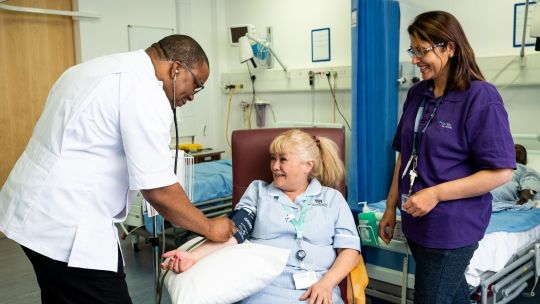
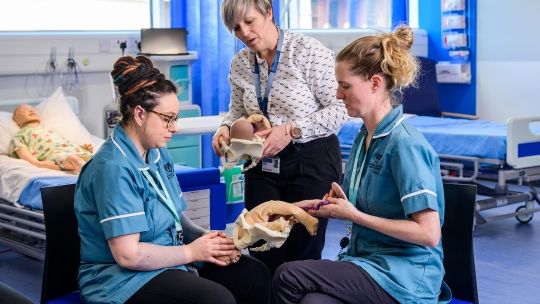
Led by experienced staff, you will also benefit from our impressive facilities, including our simulation nursing wards at our Uxbridge Campus.
Employers are increasingly requiring prescribing as a core requirement for their employees, therefore having this sought-after qualification to your name will open many opportunities to you.
This programme is for suitably qualified nurses, midwives and allied health professionals who wish to further their career by becoming a Non-Medical Prescriber.
Why study this subject?
By taking this course you will become a safe and confident independent prescriber.
Upon completion of this course you will be able to demonstrate skill in monitoring, recording and responding to medicines and modify treatments or refer the patients as appropriate based on a comprehensive understanding of how medicines work. Numeracy skills relevant to prescribing practice will also be developed.
You will also be taught to consider safe, cost effective and appropriate prescribing, taking into account ethical influences at individual, local and national levels.
Why study at Buckinghamshire New University?
At BNU you will learn from professionals who have a wealth of experience to pass onto you. Our Non-medical Prescribing teaching team consists of six lecturers all of whom are qualified as Independent and Supplementary Prescribers, three are nurses and three are pharmacists with plenty of clinical experience between them.
Each student on the course is allocated a personal tutor from the team to ensure you are academically supported and this will also provide you a link with the practice environment.
What facilities can I use?
The campus at Uxbridge houses fully equipped simulation suites for the development of clinical skills. Check out our facilities section for more information.
Whilst studying with us you will also use our BucksAnywhere web service, which provides access to many of the software applications you use for learning and studying. BucksAnywhere can be used from your own device or from a University owned PC or laptop, from any location.


What will I study?
The Non-Medical Prescribing programme is comprised of two modules, and has a blended learning approach, incorporating 16 days of teaching activity, 8 days of which will be in-person. The remaining 8 days will be supported through interactive online learning and teaching, including digital media platforms.
There will be 2 summative examinations, these being numeracy and pharmacology, which will be undertaken in-person. Academic work, with respect to portfolio completion, will be submitted digitally.
Sessions will focus on consultation, history-taking, and pharmacological and therapeutic principles for nurses, midwives, and allied health professionals. Further, principles and theories relevant to the role of the non-medical prescriber, e.g. accountability and ethics, clinical governance and medicines optimisation will be explored.
How will I be taught and assessed?
Assessment Strategy Nurse, Midwife and Allied Health Professional:
- Numeracy exam
- Pharmacology exam
- Portfolio 1
- Portfolio 2 (incorporating a practical skills assessment, in the clinical setting)
Still got questions or would like more information? Check out our frequently asked questions.
How to Apply
If you wish to apply, download the Non-Medical Prescribing Application Form below.
If you have any questions or queries about the application process, please email nmp@bucks.ac.uk
What are the course entry requirements?
Level 6 Entry Requirements
Nurses/Midwives: The applicant must be a registered nurse or midwife with at least one year’s post qualifying experience. The applicant must provide evidence via the Accreditation of Prior and Experiential Learning (APEL) process of their ability to study at degree level. 60 credits at Level 5 are normally required to access the degree level programme.
Allied Health Professionals: must be registered with the Health and Care Professions Council (HCPC) in a relevant allied health profession and have three years post qualifying experience. The applicant must provide evidence via the Accreditation of Prior and Experiential Learning (APEL) process of their ability to study at degree level. 60 credits at level 5 are normally required to access the degree level programme
Level 7 Entry Requirements
Nurses/Midwives: The applicant must be a registered nurse or midwife with at least one year’s post qualifying experience. The applicant must provide evidence via the Accreditation of Prior and Experiential Learning (APEL) process of their ability to study at degree level. 60 credits at Level 6 are normally required to access the master’s level programme.
Allied Health Professionals: must be registered with the Health and Care Professions Council (HCPC) in a relevant allied health profession and have three years post qualifying experience. The applicant must provide evidence via the Accreditation of Prior and Experiential Learning (APEL) process of their ability to study at degree level. 60 credits at level 6 are normally required to access the master’s level programme
Still have questions or would like more information?
Check out our frequently asked questions.
What are the tuition fees
Home
-
Home, Academic Year 2026 - 2027: £2,750 *
Please note all of the 2026/27 fees stated are subject to parliamentary procedure. Tuition fees are expected to increase each academic year in line with the maximum permitted value set by the Government for that academic year. The expected rise for Home undergraduate students (including those on a foundation year course), may impact both new and continuing students.
Please note, distance learning and international fees are subject to change for 2027/2028 intake.
Additional costs
Your tuition fees cover most course costs, but you may need to budget for additional expenses. These can include specialist equipment, project materials, professional memberships, field trips or placements, as well as everyday student costs like printing, books and stationery.
Contact us
If you have any questions about the fees above, contact our enquiries team by completing this form.
Course leader