
MSc Mental Health Nursing
- Study Mode: Full Time
- Location: Uxbridge
- Duration: Two Years
- Start Date: September 2026
Do you want to become an advocate for mental health support and wellbeing? This MSc Mental Health Nursing degree not only allows you to become a vital part of a compassionate healthcare team providing physical and mental health care, but also positions you at the forefront of mental health advocacy and development in society and healthcare systems.
On this two-year fast-track degree, you’ll acquire the expertise to offer the highest standard of person-centric care, guiding individuals through their most vulnerable moments and making a difference to their lives.
Our mental health nursing degree programme integrates academic study alongside practice-based learning. It is underpinned by a strong collaboration between the University, service users (experts by experience) and our NHS practice partners, in response to both Nursing & Midwifery Council policy and regulatory developments. Upon completing this degree, you will be qualified to register with the Nursing & Midwifery Council, beginning a distinguished career as a registered mental health nurse.

We have developed a comprehensive suite of facilities specifically tailored to enhance the learning experience in the field of mental health nursing, and designed to help with creating real-life scenarios.
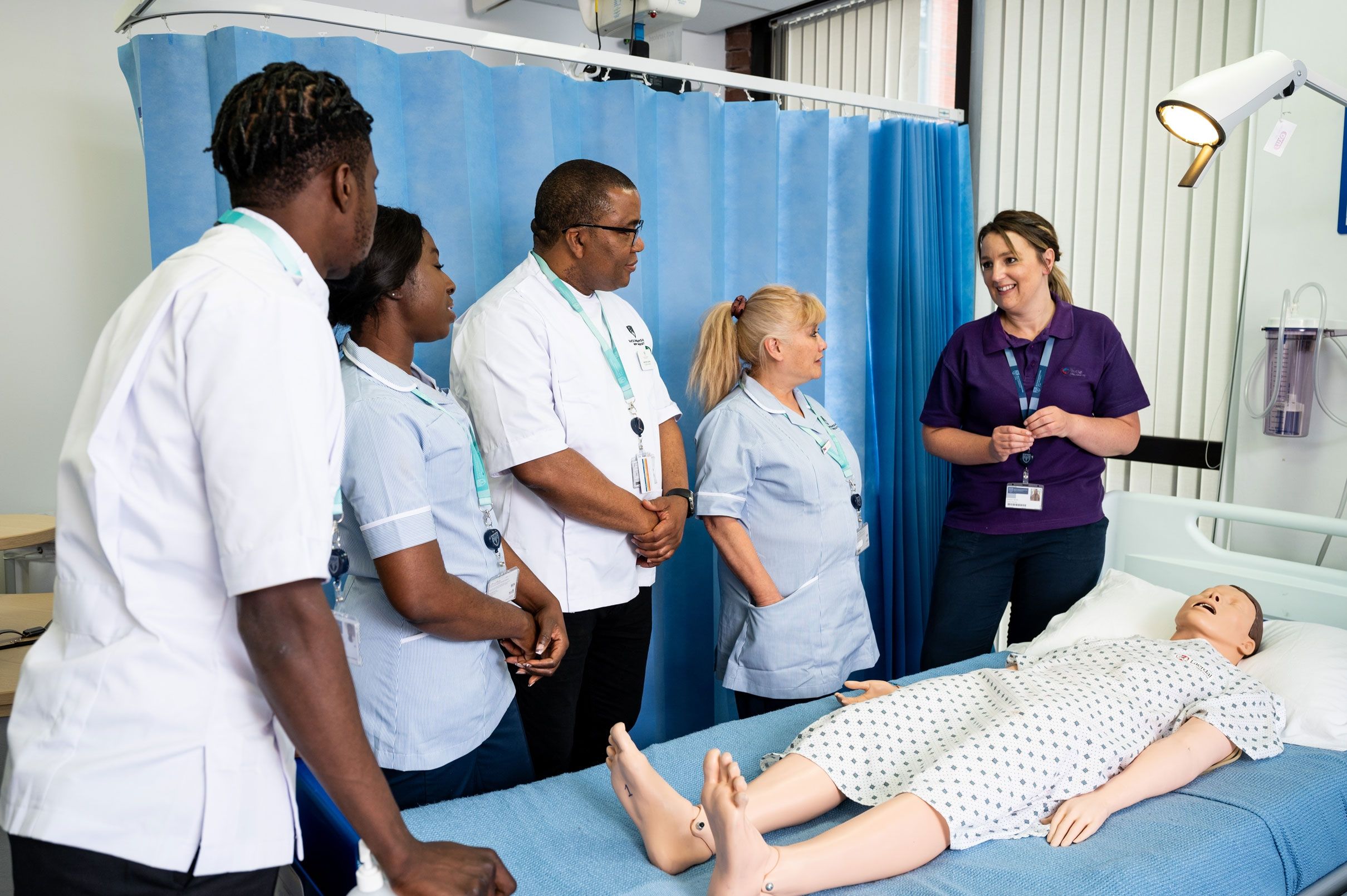
Simulation plays a pivotal role in our nursing and healthcare programs, particularly in the context of mental health. Across our campuses, we have meticulously constructed simulation labs that replicate working wards and other relevant settings. These facilities are not just about practicing technical skills; they are designed to immerse you in scenarios that closely mirror the complexities and nuances of mental health care. This helps ensure that when you embark on your placements, you are well-prepared and confident in your mental health nursing abilities.
One of our unique features is a simulated living room environment. This space is crucial for practising scenarios that resemble community home visits or counselling sessions, areas of paramount importance in mental health nursing. In this controlled setting, you can hone your skills in conducting sensitive conversations, managing diverse emotional states, and applying therapeutic techniques, all under the guidance of experienced professionals.
Additionally, we prioritise the integration of the latest technologies and therapeutic approaches in mental health care. This means you’ll have access to cutting-edge tools and resources that are currently shaping the future of mental health treatment and support.
Our campuses also offer an inclusive, safe, and supportive environment, fostering an atmosphere where students can learn, experiment, and grow without hesitation. By spending regular time in these simulation areas, you will not only refine your technical competencies but also develop the critical soft skills essential for effective mental health nursing, such as empathy, communication, and ethical decision-making.
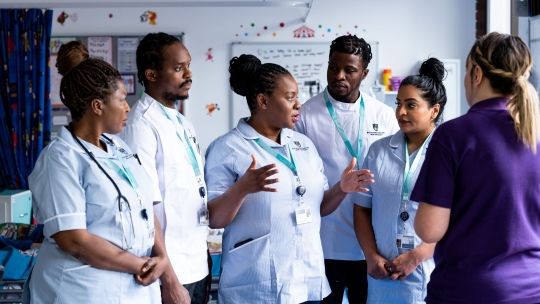
Throughout the course, you’ll allocate approximately half of your time to clinical practice and the remaining half to University-based learning. Our strong partnerships with various NHS Trusts and independent care providers in the region ensure that students have diverse and enriching clinical placements.
BNU works closely with a range of practice partners across Buckinghamshire and London. You will be allocated to one or more of the following to experience hospital and community based care and specialist mental health care:
- Central and North West London NHS Foundation Trust - Including in Uxbridge, Harrow and Northwick Park Hospital, Ealing, Milton Keynes
- West London NHS Trust - Including Hounslow and Broadmoor
You may also have the opportunity to placement in a number of private health care providers, prisons, nursing homes or GP surgeries. On placement you’ll be supported by trained assessors and supervisors to learn, build up your confidence and put your learnt skills to practice.
Whilst nursing is a rewarding career, we also understand studying mental health nursing at university can be challenging at times. Throughout your time on the course you’ll gain direct support both in the classroom and on placement, as we provide a personal tutor who will check in with you on a regular basis and practice visitors to support your learning in practice.
On campus you can find further support in the form of our Student Wellbeing Centre and our Student Learning Achievement Centre. Here we will be able to help you with a range of areas such as academic writing and building your CV.
To financially support your studies, the UK Government are continuing to provide mental health nursing students with a payment of at least £5,000 a year which will not need to be paid back. Find out more about the NHS Learning Support Fund and the eligibility criteria.
What will I study?
Our MSc in pre-registration Mental Health Nursing is designed for high achieving graduates, recognising that you’ll bring transferable academic skills, healthcare experience and valuable life experience to your studies.
This fast-track two-year degree programme integrates postgraduate academic study alongside practice-based learning. It is underpinned by a strong collaboration between the University, service users (experts by experience) and our NHS practice partners, helping you to gain the knowledge and skills you need for your future career in mental health nursing.
Mental health is a critical element of overall wellbeing; mental health challenges and problems deeply affect individuals and communities. This essential aspect of health is now receiving the recognition and understanding it merits, leading to more effective recognition of mental ill health, leading to improved diagnosis and treatment strategies. Our society depends on the dedication of professionals who offer empathetic and expert care to those facing mental health challenges.
Choosing to study Mental Health Nursing is a decision to embark on a deeply rewarding and increasingly vital profession. This field is not just about understanding the complexities of mental health conditions, but it's also about fostering a deeper empathy, developing strong communication skills, and learning to offer holistic care that respects the dignity and individuality of each patient.
As a Mental Health Nurse, you'll be equipped to meet the growing need for professionals who can navigate the intricate landscape of mental health care. You'll learn how to work in diverse settings, from hospitals and community health centres to schools and private care environments, providing essential support to people of all ages and across all walks of life. In this role, you will be instrumental in advancing mental healthcare and providing the best treatment options available. Join us in making a profound and lasting impact in the field of mental health.
This course offers a blend of theoretical knowledge and practical experience. You'll explore the latest research and treatment approaches in mental health, while hands-on clinical placements will provide you with real-world experience under the guidance of experienced professionals. This combination ensures that you graduate not only with knowledge but with the confidence and competence to make a real difference.
Furthermore, studying Mental Health Nursing opens doors to a range of career opportunities. From clinical practice to research, policy-making, and advocacy, the skills you gain will be transferable across various roles, empowering you to shape your career in a way that aligns with your passions and goals.
Led by a dedicated teaching team of professional nurses and educators, you’ll have access to their wealth of clinical expertise and research activity. This will allow you to benefit from their experiences, insights and perspectives to enhance your learning.
As part of your MSc Mental Health nursing degree you will also complete authentic theory assessments which reflect real life nursing practices, such as presenting cases, medicines administration and report writing, preparing you for your future profession.


How will I be taught and assessed?
This pre-registration postgraduate nursing programme seamlessly blends academic and practical learning, fostering collaboration between the University and practice partners. Embracing a student-centred philosophy, the course enables you to gain essential knowledge, skills, and professional values necessary for the delivery of compassionate, safe, and effective mental health nursing care.
Throughout the course, you’ll allocate approximately half of your time to clinical practice and the remaining half to University-based learning. Our strong partnerships with various NHS Trusts and independent care providers in the region ensure that students have diverse and enriching clinical placements.
When you’re on campus, your academic study will be undertaken through varying including seminars, lectures, exploring authentic scenarios and case studies as well as online learning.
We prioritise simulation activity, helping you to acquire skills and behaviours through practice. Nursing simulation incorporates the use of human patient simulators in a virtual ‘real-life’ healthcare environments and situations. Within this learning environment, real-time evolving clinical situations can be simulated, repeated, evaluated, and reflected, reducing the risk of patient harm.
To help build your digital skills, online teaching and digital learning opportunities, such as discussion boards and interactive web-based activities, will also be integrated throughout many modules within this programme. This helps you to develop and enhance the necessary digital skills required to work in today’s health care environments.
We include assessments which reflect real life nursing practices and, across the three years, you will be assessed through a number of means, such as:
- reflective assignment
- presentations
- exams
- academic poster development
- assignments
- literature review
- oral exams.
You are also required to complete the knowledge skills and behaviours included in the Practice Assessment Document in each year of practice.

What are the course entry requirements?
Please note we are currently not accepting applications from International students who require a CAS to study in the UK for this course.
To study this course, you will need to have obtained the following:
- Classification of 2:1 or above in any subject/discipline OR consideration will be given to applicants who have: Classification of 2:2 in a subject with relevant content and experience, e.g., sociology; psychology; physiology; bio- chemistry; health studies or social work.
- Five GCSEs at grade C or above, including English language or literature, mathematics, and a science subject
- Evidence of study within the previous five years.
- Establish digital and technological literacy on application.
English language requirements
For those whose first language is not English, there is a requirement to demonstrate proficiency in written and spoken English through application and interview. An IELTS score of 7.0 overall with no section below 6.5 or an equivalent is also required. Find out more on our general entry requirements page.
Using an NMC-approved pre-registration qualification
If you have completed an NMC-approved pre-registration nurse, midwife or nursing associate programme, we will accept this as evidence that you have the necessary knowledge of English.
Additional requirements
If successful at interview you will be required to complete the following as part of the condition of your offer:
- Verified evidence of 500 hours of related clinical practice in the last 3 years. This will be demonstrated through an enhanced CV
- A reflective essay demonstrating Recognition of Prior Learning (RPL).
Further details and guidance will be provided upon successful interview.
Shortlisted applicants will be required to attend a Selection Day.
Applications are made through UCAS.
All offers are subject to Academic, successful RPL, Enhanced CV, satisfactory Occupational Health and enhanced Disclosure and Barring Service (DBS).
The government has said it will remove the proposed legal requirement to have COVID-19 vaccinations to work, or attend placements, in health and social care. We & our practice partners continue to encourage you to get vaccinated for your & others' safety.
Modules
This provides a guide of the modules that make up your course. You can find more information about how your course is structured on our Academic Advice section.
What are the tuition fees
Home
-
Home, Academic Year 2026 - 2027: £9,790 per year *
Please note all of the 2026/27 fees stated are subject to parliamentary procedure. Tuition fees are expected to increase each academic year in line with the maximum permitted value set by the Government for that academic year. The expected rise for Home undergraduate students (including those on a foundation year course), may impact both new and continuing students.
Please note, distance learning and international fees are subject to change for 2027/2028 intake.
Additional costs
Your tuition fees cover most course costs, but you may need to budget for additional expenses. These can include specialist equipment, project materials, professional memberships, field trips or placements, as well as everyday student costs like printing, books and stationery.
Contact us
If you have any questions about the fees above, contact our enquiries team by completing this form.
What are my career prospects?
On successful completion of the programme, you will be eligible to register as a registered mental health nurse with the Nursing & Midwifery Council. With this qualification, you may find employment within the NHS or with private healthcare providers.
As a Mental Health Nurse, the scope of your career opportunities is both broad and dynamic, encompassing a range of settings where your expertise can make a significant impact.
The following are just a few examples of where a Mental Health Nurse can thrive:
- Hospital-Based Staff Nurse: specialising in areas such as intensive care, psychiatric wards, or rehabilitation units, focusing on acute mental health conditions and recovery processes.
- Acute or Rehabilitation Centre Nurse: providing specialised care in facilities dedicated to the treatment and recovery of individuals with acute mental health issues or ongoing rehabilitation needs.
- General Practice Nurse: employed in a GP surgery, offering initial consultations, mental health assessments, and ongoing support within a community healthcare setting.
- Community Mental Health Nurse: functioning similarly to a district nurse, this role involves visiting patients in their homes, offering tailored care and support in familiar environments.
- Nursing Homes: focusing on the mental health needs of elderly or long-term care residents, often dealing with dementia, depression, and age-related mental health issues.
- Prison Mental Health Nurse: working within the correctional system to provide mental health care and support to inmates, a role that requires a unique set of skills given the challenging environment.
- Military Mental Health Nurse: serving in the armed forces, addressing the mental health needs of military personnel, including PTSD and other service-related mental health conditions.
- School Mental Health Nurse: operating in educational settings, focusing on the mental health and developmental needs of children and adolescents.
- Mental Health Nurse Researcher: conducting research in various aspects of mental health nursing, contributing to the development of best practices and new therapeutic approaches.
- Occupational Health Mental Health Nurse: working within corporate or industrial settings, focusing on the mental wellbeing of employees, stress management, and workplace mental health initiatives.
- Crisis Intervention Nurse: specialising in crisis response, providing immediate care and stabilization in emergency mental health situations.
- Telehealth Mental Health Nurse: utilizing digital platforms to provide remote mental health care and consultation, a rapidly growing area in the healthcare sector.
- Substance Abuse and Addiction Nurse: specialising in the treatment and support of individuals dealing with substance abuse and addiction issues.
Each of these roles plays a crucial part in the wider mental health care landscape, offering diverse and fulfilling career paths for those passionate about making a difference in the field of mental health nursing.
Course leader