
BSc (Hons) Paramedic Science
- Study Mode: Full Time
- Location: High Wycombe
- Duration: Three or Four Years
- Start Date: September 2026 and January 2027
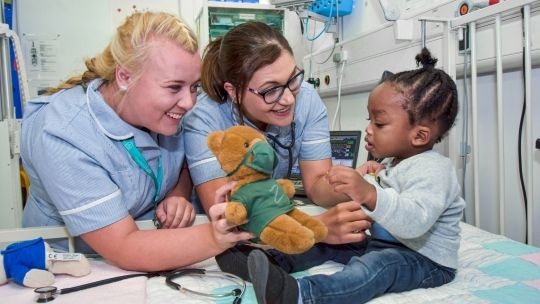
Do you want a career in a fast-paced and unpredictable environment? As a Paramedic your daily role will see you handling life-threatening emergencies, caring for patients in distress and supporting people in their most vulnerable moments. Whether working as part of a team or alongside other healthcare professionals, you’ll deliver essential care in a variety of settings: indoors, outdoors, on the road, or even in the air.
This Health and Care Professions Council (HCPC) and the College of Paramedics accredited BSc (Hons) Paramedic Science degree combines theory and hands-on practical teaching and placements to help you to become a confident and competent frontline healthcare professional.
* Please note the Foundation Year of this course is Subject to Validation.


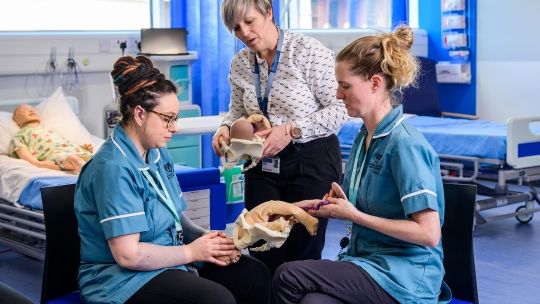
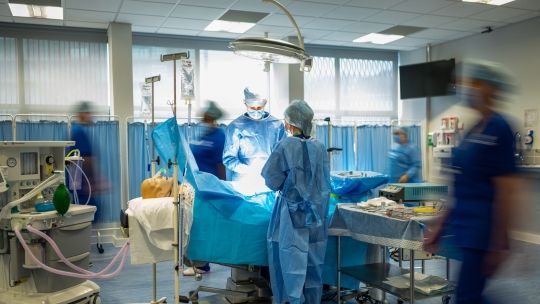
As a student on our BSc (Hons) Paramedic Science course, you’ll benefit from outstanding opportunities to build your clinical skills and confidence before entering the workforce. Based at our High Wycombe campus, you’ll have access to an exceptional range of simulation facilities, including two fully equipped simulation ambulances, cutting-edge simulation labs and a A&E unit, debrief suite, and major incident command room.
These facilities enhance the realism and depth of our simulation offering, giving you the chance to experience the fast-paced and high-pressure challenges of emergency healthcare. The A&E space is designed to mirror real hospital settings, allowing you to practice critical thinking, decision-making, and teamwork during simulated medical emergencies - all within a safe, controlled environment.
Throughout the course, you’ll also work with advanced simulation manikins that behave like real patients, take part in role-play sessions with service users, and experience moulage, the application of realistic, often dramatic, injuries to add authenticity to training scenarios. Our mock ambulance and flexible scenario spaces allow for immersive experiences in a variety of environments a paramedic might encounter, such as nightclubs, public spaces, or busy bars.
All of this is delivered within a vibrant, friendly student community, where you’ll have countless opportunities to connect with peers, build your network, and develop the essential skills needed for a successful career in paramedic science.
Placements form a core component of our course, and we are proud of our longstanding commitment to delivering high-quality training within the local community.
Throughout your time with us, you will have the opportunity to apply your knowledge in real-world settings, gaining hands-on experience while building professional networks with local hospitals and NHS trusts. We have established strong partnerships with both the South Central Ambulance Service NHS Foundation Trust and the London Ambulance Service NHS Trust.
Our degree offers a comprehensive exploration of paramedic science, with a strong emphasis on delivering care across a wide range of urgent, emergency, and unscheduled care scenarios.
We are proud to offer a highly respected course, underpinned by excellent teaching that is closely integrated with clinical practice. You'll benefit from strong NHS partnerships, a supportive and inclusive student community, and a convenient location just 35 minutes from central London.
Every aspect of our BSc (Hons) Paramedic Science course has been carefully designed to develop you into a confident, competent, and compassionate healthcare professional. The curriculum is informed by the extensive clinical experience of our academic staff. Their insights ensure that the course remains relevant, practical, and closely aligned with the realities of modern paramedic science practice.
We have structured the degree in line with the professional frameworks and standards set by the Health and Care Professions Council (HCPC) and the College of Paramedics. This includes a strong focus on evidence-based practice, patient-centred care, ethical decision-making, and the safe and effective use of advanced imaging technologies.
Upon successful completion of the course, you’ll be eligible to apply for registration with the HCPC as a qualified Paramedic.
If you have an interest in healthcare and are looking for a rewarding and fulfilling professional role with great purpose, a career in paramedic science may be a perfect fit for you. To support you in becoming a paramedic, the UK Government is continuing to provide financial support to paramedicine students with a payment of at least £5,000 a year, which will not need to be paid back. Find out if you are eligible on the NHS Learning Support Fund website.
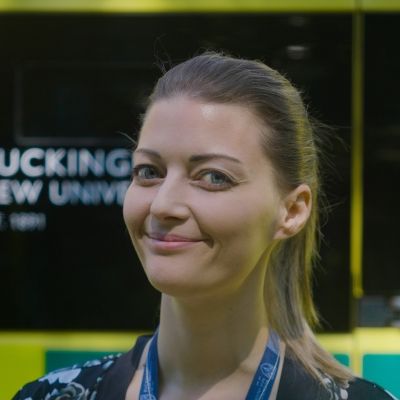
By partnering with two NHS ambulance services, South Central Ambulance Service NHS Foundation Trust and London Ambulance Service NHS Trust, as well as acute and community health and social care providers, we are providing students with excellent opportunities to gain clinical experience and core capabilities prior to joining the workforce on completion of their studies.Will Broughton Associate Professor of Paramedic Science

What will I study?
This BSc (Hons) Paramedic Science course provides a recognised route to registration as a paramedic with the Health and Care Professions Council (HCPC).
The role of the paramedic has evolved considerably in recent years. Today, paramedics operate across a range of clinical settings, including frontline ambulance services, NHS walk-in centres, GP surgeries, and hospital environments.
To prepare you for effective practice in these varied contexts, the course integrates academic study, simulated care, and frontline placement experience. This comprehensive approach is designed to equip you with the knowledge, skills, and professional competencies required to become a confident and capable paramedic.
You will gain experience across multiple settings, including NHS ambulance services, urgent care clinics, general practice, and acute hospital trusts. The curriculum covers key subjects such as anatomy, physiology, pharmacology, patient assessment, management of medical and trauma emergencies, advanced life support, and resuscitation.
In addition to clinical training, you will develop essential skills in clinical decision-making and the application of research and evidence-based practice in real-world scenarios. Each year, you will undertake supervised placements in urgent and emergency care settings, providing invaluable opportunities to learn directly from experienced professionals, build networks, and gain a realistic insight into the role of a paramedic.
Developed in close collaboration with local NHS trusts, the programme is designed to ensure you graduate fully prepared for the demands of modern paramedic practice and are equipped with both academic and clinical excellence, and proud of your achievements.
Building upon a long standing history of supporting and developing individuals to achieve registered paramedic status, South Central Ambulance Service NHS Foundation Trust (SCAS) is proud of this new partnership with such a well-respected university. The challenges faced by the NHS during the global pandemic have been well reported and to develop a new degree level clinical healthcare programme during this time has been nothing short of extraordinary and is testament to both BNU and SCAS colleagues. We look forward to a collaborative and successful partnership with BNU.Howard Farley Senior Education Manager, South Central Ambulance Service NHS Foundation Trust
How will I be taught and assessed?
Teaching and learning will take a blended approach with students having theory-based tasks to complete in advance of practical sessions or tutor-led discussions. This is a challenging course, and the team will make available a wide range of resources to ensure students are successful.
Your learning will always be applied to clinical practice whether in the form of a simulation or scenario, research activity, student presentation or case study. Practice-based education is a critical component and will allow you to hone your clinical knowledge and practical skills when treating actual patients.
Some days may be emotionally demanding, which makes having a supportive environment essential. At BNU, we foster a close-knit, encouraging community where you can turn to both your peers and our dedicated teaching staff for support and reassurance through shared and individual challenges.
Assessments are varied and will include written submissions, presentations, examinations and practical assessments. You'll learn and be assessed on important patient-facing skills like communication, professionalism, clinical knowledge and practical skills. We'll assess your decision-making and reasoning abilities too so you can justify what you did or why you want to carry out a patient intervention.
Throughout the course you'll work on a personal e-portfolio which will demonstrate your competencies in clinical practice. In each year of study, we'll look to see that you've been able to evidence the core capabilities required to progress through the course and to identify areas where we can support your learning further. Your e-portfolio is entirely owned and driven by you and should be something you'd happily share with a prospective employer to better evidence your learning and readiness for practice.
Assessments vary according to modules and are designed to test your understanding of the modules. Some of the ways you will be assessed include:
- reports
- exams
- presentations
- coursework


Gaining experience on the frontline whilst studying to become a paramedic is so invaluable, and a great way to put theory into practice. We’re looking forward to supporting students from BNU and providing placements to enable them to become great paramedics.Dr John Martin Chief Paramedic and Quality Officer for London Ambulance Service NHS Trust
What are the course entry requirements?
A typical offer will require a UCAS tariff score of: 112 - 136 (Full-time) or 32 - 56 (Foundation Year)
UCAS points can be obtained through qualifications such as A levels, T levels, BTEC or an Access to Higher Education course in a relevant subject. Please list all your qualifications on the application form as you will be asked to provide copies when we receive your application.
An Access to Higher Education qualification which must be in a science-based subject is also acceptable.
You may find it beneficial if you have prior knowledge of health or human science, so we prefer if you have relevant A Levels - such as Biology, Health and Social Care, Chemistry, Psychology, Physics, Physical Education, and Sociology. However, it is not essential. So therefore we will accept any T level, but Health and Science preferred.
In addition, you will require five GCSEs including Maths, English and Science at Grade C/4 or above (or equivalent).
Applicants must be physically fit and able to undertake clinical placements, which will involve frontline ambulance duties. This includes (but is not limited to):
- lifting and carrying of equipment
- climbing flights of stairs
- moving and handling patients
- undertaking a variety of shifts, including night-work
Attend the compulsory interview and selection event for shortlisted candidates.
Those for whom English is not their first language must achieve a minimum score of 7.0 overall or equivalent for the International English Language Test Score (IELTS), with no on element below 6.5.
For further details of our international English entry requirements, please visit our international pages.
Desirable / Recommended
Full UK driving licence; this is strongly recommended to allow students to operate a vehicle to attend practice placements. Whilst public transport is possible for some locations, this cannot be guaranteed.
The government has said it will remove the proposed legal requirement to have Covid-19 vaccinations to work, or attend placements, in health and social care. We & our practice partners continue to encourage you to get vaccinated for your & others' safety.
DBS checks
All applicants (except Foundation Year applicants) are required to complete a criminal record disclaimer form and give their permission for us to obtain an enhanced police check with the Disclosure and Barring Screening Service (DBS).
Each year after that, students are required to self-declare any Police cautions or convictions before each practice education module. The DBS in the United Kingdom does not currently conduct overseas criminal record checks.
Therefore, international applicants, those without British citizenship and British citizens with a significant overseas residency, require a criminal record check or certificate of good conduct from their home/overseas country before entering the course.
Where an equivalent check is provided, applicants must complete an enhanced police check with the DBS a year later.
The government has said it will remove the proposed legal requirement to have Covid-19 vaccinations to work, or attend placements, in health and social care. We & our practice partners continue to encourage you to get vaccinated for your & others' safety.
Foundation Year
This course is also offered as a four-year programme, including an initial Foundation Year. The Foundation Year will allow you to develop your academic study skills and build confidence in your abilities, identifying your own strengths and development needs for progression onto an undergraduate programme.
Professional checks
Professional checks (DBS, Occupational Health, and character and suitability) are not required when you join the Foundation Year. They are only required when you move into Year 1, and you must pass these checks to progress.
Modules
This provides a guide of the modules that make up your course. You can find more information about how your course is structured on our Academic Advice section.
Students starting in September 2025 will have the flexibility to choose their modules in the second and third years, complemented by a subject-specific curriculum in your first year.
What are the tuition fees
Home
-
Home Foundation Year, Academic Year 2026 - 2027: £9,790 *
-
Home, Academic Year 2026 - 2027: £9,790 per year *
International
-
Overseas/International Foundation Year, Academic Year 2026 - 2027: £15,910 *
-
Overseas/International, Academic Year 2026 - 2027: £15,910 per year *
Please note all of the 2026/27 fees stated are subject to parliamentary procedure. Tuition fees are expected to increase each academic year in line with the maximum permitted value set by the Government for that academic year. The expected rise for Home undergraduate students (including those on a foundation year course), may impact both new and continuing students.
Please note, distance learning and international fees are subject to change for 2027/2028 intake.
Additional costs
Your tuition fees cover most course costs, but you may need to budget for additional expenses. These can include specialist equipment, project materials, professional memberships, field trips or placements, as well as everyday student costs like printing, books and stationery.
Contact us
If you have any questions about the fees above, contact our enquiries team by completing this form.
What are my career prospects?
The demand for paramedics has never been higher for the UK Ambulance Services which is why it’s such an important time to consider this challenging yet fulfilling career.
Our BSc (Hons) Paramedic Science course will help prepare you for a range of career possibilities. Many of our graduates go on to work with an ambulance service in the public or private sector but there are also increasing opportunities to work elsewhere in health and social care.
Completing this course will make you eligible to register as a paramedic with the Health and Care Professions Council (HCPC) and provide you with the firm academic understanding and practical experience you’ll need to excel, whatever path you choose.
Graduates can also choose to study for a postgraduate course.
Course leader





- Associate Dean External Engagement (College of Health and Society)