
BNU Art & Design Show: How we watch Animals
For Photography student Rosie Lambert, a visit to an elephant sanctuary in Thailand became the starting point for a thought-provoking final-year project exploring the relationship between humans and animals in zoos.
Now preparing for the end-of-year Art & Design Show (26 June-July, Brunel Engine Shed), Rosie’s black-and-white photographic series examines how zoo enclosures and spaces shape the way people observe animals.
“I’ve always been interested in human-animal relationships,” she said, “but actually being at the sanctuary and interacting with the animals really put into perspective how different that experience was to the carefully designed and controlled environments in zoos.”
Rosie went on to develop a project focused on how zoo spaces shape not only animal lives, but also the behaviour and perception of visitors. Her project explores three key themes: architecture, spectatorship and the role of empty enclosures, exploring how glass barriers, fences and enclosure design shape the way animals are experienced by visitors.
As well as photographing the animals – at London Zoo, Whipsnade Zoo and Woburn Safari Park - Rosie became increasingly interested in the people observing them.
“I was really drawn to how we watch animals from behind these barriers, especially children who constantly question why the animals were not in the wild habitats shown on the zoo signage. It changes how we think animals should exist,” she explained.
Shot entirely in black and white, Rosie’s zoo series adopts a documentary style intended to create a stronger emotional response.
“Black and white gives more of a statement, it feels more documentary, rather than coffee table book,” she said.
Rosie is also experimenting with sound as part of the exhibition, layering audio recordings to recreate what the zoo environments might sound like from the animals’ perspective.
The project has challenged Rosie creatively and personally, as she reflects on her own role as both observer and photographer.
“There were moments where I became the spectator myself, and that was conflicting,” she admitted. “But I think it helped me grow as a photographer.”
She hopes her zoo series will encourage viewers to think differently about the ways they observe animals in controlled spaces.
“I want people to think about how they watch, why they’re watching, and what it means to watch animals like that,” Rosie says. “We’ve all been in that position where we’re excited to see animals behind barriers without really considering anything else.”
Following graduation, Rosie hopes to pursue a career in editorial photography and storytelling. She has already secured a placement with BBC Wildlife Magazine this summer.
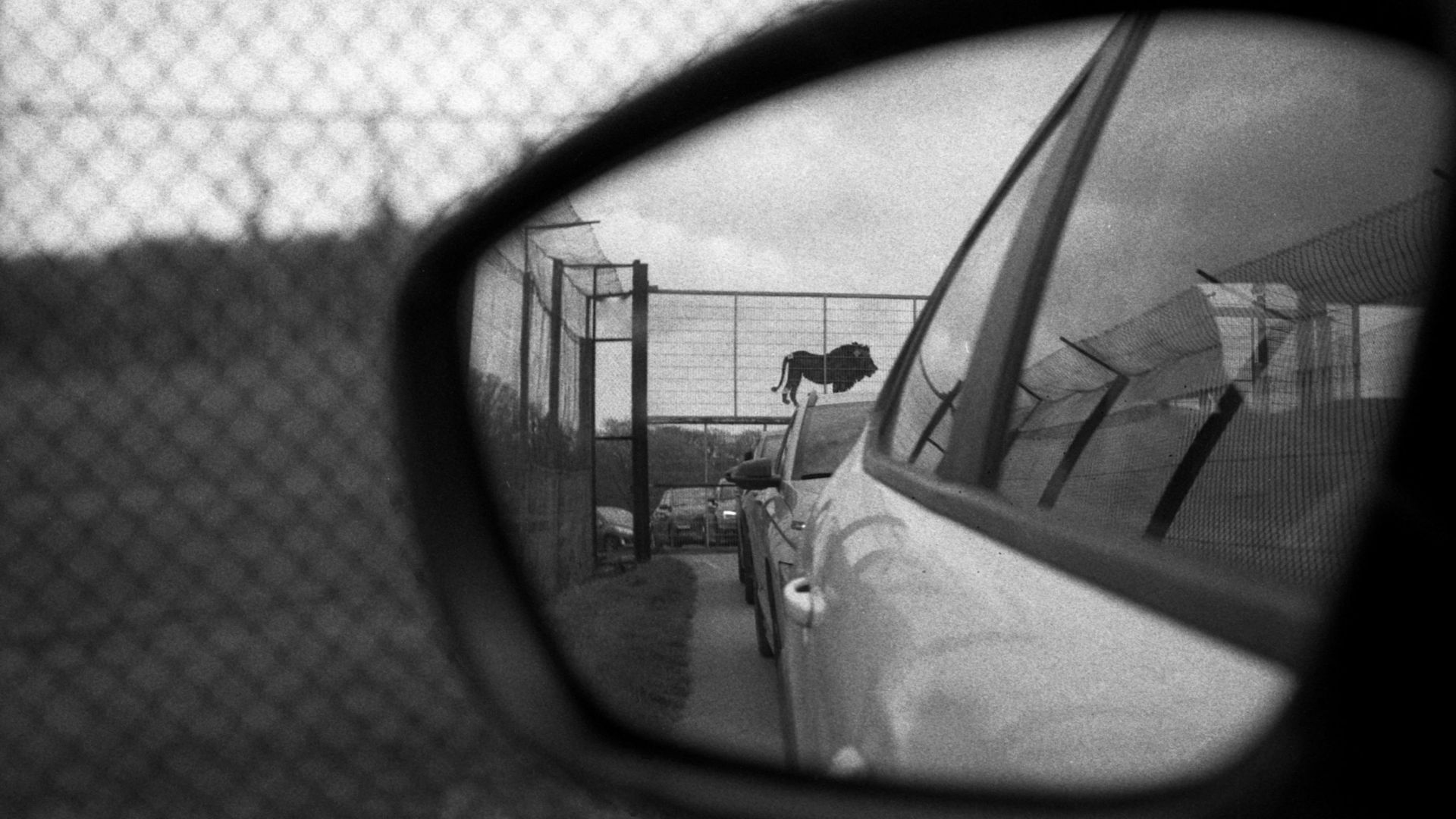
On the wing mirror photo Rosie said: "The wing mirror picture focuses on the architectural display of animals and how the vehicle controls how we see them. I wanted to show that what we see of the animal is filtered through the car's wing mirror, almost narrowing our view and controlling how we watch. I also aimed to document a child hanging out the car window, ignoring the safari park's rules, to allude to the idea of human dominance over animals and to our 'fractured' relationships with them in captive environments."
On the lioness photo: "This represents the idea of a shared gaze between humans and animals, with a moment when the encounter becomes reciprocal rather than just observing animals and then walking away from us. I also like how the children are framed in the image, which shows the idea of spectatorship embedded in people at a young age. We are taught to watch animals, which almost immediately shapes our understanding of them."
Visitors are invited to experience this work in person at Buckinghamshire New University’s Art & Design Show 2026. The show brings together innovative work from final-year students across art, design and creative disciplines. Visit here for full details, opening times and to plan your visit.