
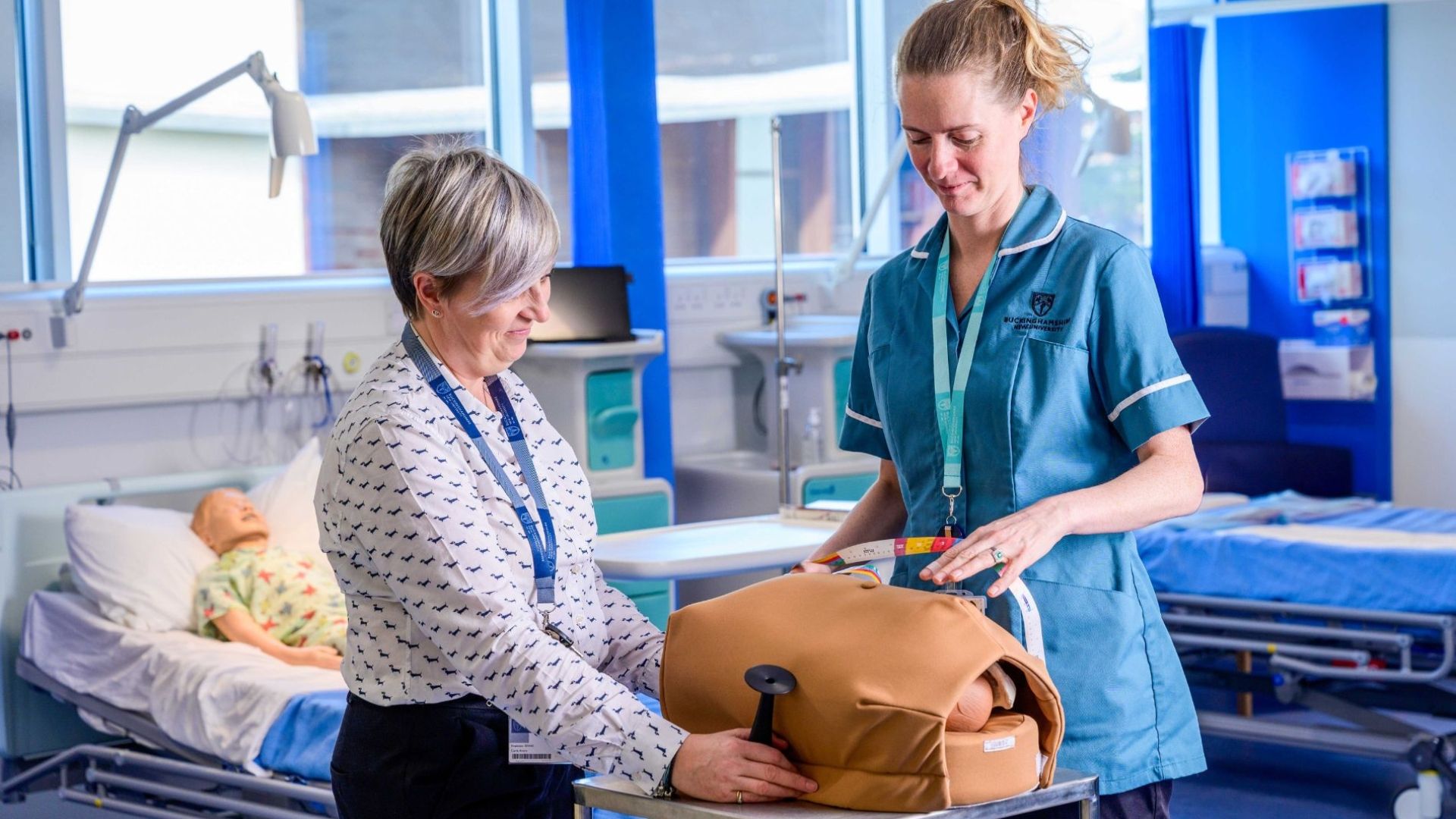

Beyond the Amos Report: How BNU offers an “antidote” to the failing system
The UK’s maternity system is currently caught in a "double crisis" that has left both new professionals and expectant mothers in a state of high anxiety.
The recent Baroness Amos report into maternity care, alongside national headlines, paints a sobering picture - a bottleneck of newly qualified midwives struggling to land roles and mothers reporting a system-wide lack of basic, compassionate care. But in response, Buckinghamshire New University has implemented a strategic framework to directly address these systemic failures.
While the Amos report calls for an end to the “postcode lottery” of safety and cycle of unacceptable care, BNU is already delivering the structural shift in training the investigation demands. Lead Midwife for Education, Carla Avery, argues that the solution is not just recruiting more midwives – but employing a different kind of midwife.
She said: “The national maternity crisis won’t be solved by simply adding more bodies to a ward; it requires a radical shift in the type of midwife we send into the NHS. We aren't just teaching students how to deliver babies; we are training our students to be the ‘ripples of change’ in a system that has, for too long, prioritised the biomedical model of care, and hierarchy over women’s autonomy.”
One “antidote” to systemic failings lies in providing a curriculum that prioritises professional advocacy and “civility” over clinical box-ticking. This philosophy manifests through the "Civility Saves Lives" initiative, which treats kindness as a non-negotiable safety requirement.
Research indicates witnessing incivility can reduce a staff member’s cognitive ability by up to 61% and makes teams 50% less likely to help one another. With global safety data indicating that communication failures are a root cause in up to 80% of serious medical errors, BNU trains students to be "active bystanders" capable of navigating and challenging toxic hierarchies.
Using Professional Midwifery Advocates (PMAs) within the teaching team, the university ensures graduate possess the tools they need to protect both women’s safety and their own professional integrity.
To further return autonomy to women, BNU aims to embed advanced biomechanics into its training through a new collaboration with industry expert Molly O’Brien.
This move is a direct challenge to the "medicalisation" of birth - a model Carla critiques for assuming childbirth is a condition to be "fixed”.
The philosophy of biomechanics views birth as a physiological, movement‑dependent process in which balanced maternal pelvic alignment and freedom to move optimise fetal positioning and help prevent or resolve labour dystocia.
This will empower midwives to argue for movement and time, effectively returning "control" to the mother as the National Maternity Review recommended.
Clinical skill is only one part of the equation. To combat burnout, BNU embeds a "self-care thread" into the fabric of the degree. From day one, students engage in reflective practice and mindfulness.
It isn't a "bolt-on" luxury, but a professional survival strategy to ensure BNU graduates enjoy long-term, sustainable careers rather than facing early-career exhaustion.
Despite a stagnant job market, BNU ensures its students have a clear trajectory into the workforce. A dedicated careers program begins at the start of the final year, involving mock OSCE stations, interview prep and professional statement writing.
This high-intensity support is why BNU graduates remain highly sought after by NHS Trusts, even as other regions report hiring freezes.
Ultimately, Carla believes the sector must pivot from the quantity of recruits to the quality of training. By offering a Foundation Year to bridge the gap for new candidates and focusing on the “art of the possible”, BNU is producing midwives who are prepared to listen, prepared to prioritise choice and, most importantly, prepared to stay.
Join the next generation of midwives. View our upcoming Open Days and application deadlines.
Ready to lead change in the NHS? Explore our BSc (Hons) Midwifery program and Foundation Year options.
Notes to Editors: Research references
On Incivility: Data regarding the cognitive impact of incivility is sourced from the Civility Saves Lives campaign and the research of Dr. Christine Porath (Harvard Business Review, 2013), which found that witnessing rudeness reduces cognitive ability by 61% and decreases team helpfulness by 50%.
On Medical Errors: The Joint Commission (TJC) identifies communication failure as a root cause in approximately 80% of "sentinel events"—serious, preventable patient harm—particularly during patient handovers and transitions of care.