

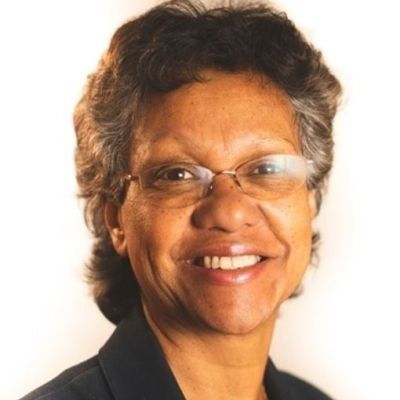
Spotlight on Dr Annet Gamell: University Council member
We caught up with Dr Annet Gamell who since 2019 has served on our University Council – which is responsible for promoting and upholding the University’s mission and values and ensuring its effective management - to find out more about the experiences and career that led her to join the BNU family.
Born to Guyanese parents, Annet attended 10 different schools by the time she was 18 because her father served in the RAF and her family moved every two to three years: “My father wasn’t an officer, we were a working class family in which education was valued and promoted. I was a little girl when I first decided I wanted to work in medicine and went on to qualify as a doctor at Charing Cross Hospital Medical School in 1980. I worked at Amersham and Wycombe Hospitals before completing my GP training in Chesham in 1984.”
Annet explains that “back then, you joined a GP practice and stayed for your whole career – it was like a marriage! And so I decided to take a year out and signed up with the British Overseas Medical Service in 1985.”
This was a time of devastating famine in Ethiopia and Annet was recruited to support a Save the Children camp in south-east Sudan. When Annet arrived, more than 92,000 Ethiopian refugees had already crossed the border with more seeking help every day.
“I was a newly trained GP and I was humbled to learn very quickly that public health, not medicine, saved lives. It was about making sure starving children had access to high energy biscuits and milk. Education was also key, ensuring families gave rehydration salts to people suffering with diarrhoea and vomiting before they became really unwell. And we had to protect the water supply to prevent the spread of disease, digging latrines and burying those who sadly died far away from the river. That’s what actually saved lives.”
Annet recalls that “engineers working for Oxfam were pumping up chocolate coloured water from the mud-filled silty rivers, then sterilising it so crystal-clear water pumped out of the camp’s taps. And one of those volunteer civil engineers was called Richard and we’ve recently celebrated our 37th wedding anniversary!”
As part of a team that went further inland to scope out a new possible camp, it was Annet who, aged just 29, was chosen to be the chief medical officer of the new site despite there being more experienced clinicians working for the charity. More than 42,000 refugees were cared for during her time in charge.
I know that education is a passport because it opened doors for me. BNU believes in potential, and provides education that transforms lives and opportunities.Dr Annet Gamell University Council member
“The stoicism of those that walked hundreds and hundreds of miles to get to the camps will never leave me. The highest recorded temperature in our desert camp was 50C, it was an extreme experience in so many ways. But it wasn’t all misery – once people recovered and had access to basic amenities there was lots of singing and dancing.”
The Sudanese government gave all volunteers a two-night stay in a Khartoum hotel before they returned home, as a gesture of thanks for their work. Annet turned on the television to see the Live Aid concert being televised from Wembley Stadium to raise funds. “I’d had minimal contact with the UK and so it was a very emotional and moving moment to see all that was being done back home to help those I’d been caring for just hours before.”
Annet explains the impact of her voluntary work in Sudan: “I've always maintained that the NHS isn’t a National Health Service, it’s a national sickness service. My time in the Sudan taught me that it’s the broader determinants of health that affect a person’s life span and can reduce the risks of serious illness: education, housing, work, green spaces, leisure and social company.”
While in Sudan, Annet was offered a GP partnership at a practice in High Wycombe which she joined in 1985 and worked locally for 34 years. “The sort of general practice I did back then was family medicine from birth to the grave, across generations of families.”
During her GP career, Annet also became involved in NHS Clinical Commissioning Groups (CCGs) which planned and commissioned healthcare services for their local area. In 2007, she chaired a GP collaborative and in 2012 became the Chief Clinical Officer of the Chiltern CCG which comprised 34 GP practices. Annet was also involved in managing the impact of A&E services moving from High Wycombe to Stoke Mandeville.
Driven by her first-hand experience and understanding of the broader determinants of health, Annet was keen to encourage greater collaboration and created a forum which comprised the chief executives of the CCGs, hospital, mental health trust, ambulance trust and Buckinghamshire Council. She recalls: “We met monthly and worked very closely to improve outcomes for local people. We were starting to establish what was essentially an integrated care board long before everybody else was mandated to do so in 2022. I’d describe my leadership style as collaborative and equitable which developed from my time in Sudan, right at the start of my career.”
In 2017 Annet was awarded the Fellowship of the Royal College of General Practitioners. The same year, Annet decided to take on non-executive roles outside her patch in Buckinghamshire, to avoid any conflicts of interest, and joined Ealing CCG where she went on to chair the primary care committee and the North West London quality committee.
In 2019, Annet joined the Luton and Dunstable Hospital Trust as a non executive director which proved to be an “interesting role” as “right in the middle of the pandemic, there was a merger with Bedford Hospital.” Annet is now deputy chair at Bedfordshire Hospitals NHS Foundation Trust, and also chairs the quality committee and the remuneration and nominations committee. She is a member of the workforce committee and the clinical ethics committee and the NED Maternity and Neonatal Safety Champion.
A “passion for the importance of education” has been a constant throughout Annet’s life. She went back to studying from 2010 to 2013 when she undertook postgraduate certificates in primary care leadership and clinical commissioning which Annet describes as “enlightening” because “when you study medicine you learn facts. Critical appraisal and writing assignments were new to me and I loved it!”
“I know that education is a passport because it opened doors for me”, says Annet who also has direct experience of how “BNU believes in potential, and provides education that transforms lives and opportunities.”
One of Annet’s three sons didn't get his expected A-level grades and decided to start work instead, although his parents also persuaded him to apply to BNU. Annet explains that when her son’s first job didn’t go according to plan, “he rang BNU on a Friday afternoon and the admissions officer said: ‘you’re just in time, Freshers’ Week starts on Monday’. He’s never looked back since graduating and now has a senior management role. His successful career is thanks to BNU.”
“BNU really is a widening participation university which believes in learners’ abilities and potential rather than their history and past achievements. Not all universities give people that chance. And I’m delighted to see how BNU supports children from service families and others who are typically under-represented into higher education - that means a lot to me.”
Annet describes her role on Council as being a “challenging but supportive critical friend” to the University, and that she enjoys “being part of running such a successful organisation which makes a huge difference to people’s lives.” She chairs the student experience committee and is the executive sponsor for the Primary Care Faculty of the Health and Social Care Academy.
As currently one of the longest-serving members on Council, she welcomes working with new colleagues. “New skills, ideas and experiences drive and stimulate transformation. I feel very privileged to work alongside such a great mix of people, personalities and skills and play my part in ensuring BNU continues to make a significant difference through the education we provide.”